
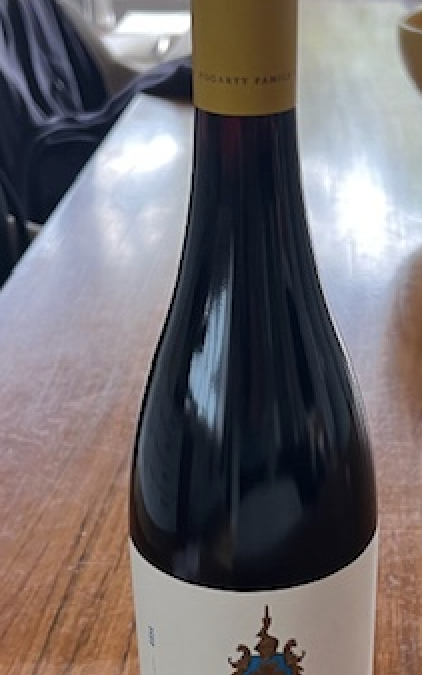
This is a story about buying a bottle of wine.
I am not endorsing drinking but buying a simple bottle of my favourite red wine gave me an insight about the nature of change and why it is so hard.
And how to make it easier, faster and lighter.
Introduction
I went to my local wine store to buy my usual bottle of Pinot Noir.
You probably have one too.
It’s a safe choice that you don’t have to think about.
It’s familiar, reliable, and removes the risk of getting it wrong.
And priced within my budget.
Except this time, it wasn’t there.
A small thing.
But in that moment,
I felt stuck.
Should I wait?
Try to remember another brand?
Pick something at random and hope for the best?
None of those options felt particularly appealing.
What should have been a simple decision suddenly felt harder than it needed to be.
Then something interesting happened.
I paused.
And instead of thinking, “I need to change my choice,” I had a different thought:
What if I just switch — not change?
That one word made all the difference.
Why “change” feels hard
The word change carries weight.
It feels permanent, risky and involves uncertainty.
When we think about changing something — even something small like a bottle of wine — it can feel like we’re stepping into the unknown with no easy way back.
That’s why we hesitate.
That’s why we default to what we know.
We don’t resist change because we’re incapable – we resist it because it feels bigger than it needs to be.
The power of a Switch
A switch is different.
A switch is temporary, reversible and low-risk.
You can switch an outfit or switch channels or gears in your bike.
When I reframed the situation from change to switch, something shifted immediately.
I felt lighter.
The pressure to make the “right” decision disappeared. I didn’t need to find the perfect alternative. I just needed to try something different — for now.
That small shift turned a problem into an experiment.
What changed in a few minutes
Once I felt lighter, everything else followed.
Instead of standing there thinking, I engaged.
I asked the shop assistant for help.
We started talking about different options.
What might I enjoy? What was similar? What was completely different?
The conversation became interesting.
What had felt like a constraint now felt like an opportunity.
I found myself looking forward to trying something new — not because I had to, but because I wanted to.
All of this happened in a few minutes.
Nothing external had changed.
But everything internal had.
The real insight
This wasn’t about wine.
It was about how we think.
Most of us operate with what you might call default thinking.
We have established patterns — ways of thinking, feeling, and acting — that generate familiar results.
Those results then reinforce the pattern.
It becomes a loop.
When something disrupts that loop — a missing wine, an unexpected question, a difficult conversation — we can feel stuck.
Our usual way of thinking doesn’t quite work, but we don’t immediately know what to replace it with.
So we hesitate.
Or we try harder using the same thinking.
And nothing changes.
The Switch Point or Moment
What I experienced in that wine store was a switch point.
A small moment where I had a choice:
- Stay in the loop
- Or switch, even briefly
The key is that a switch doesn’t require commitment.
You don’t have to change everything.
You don’t have to get it right.
You just have to try a different way of thinking — for a moment.
Why it works
When you switch your thinking, even slightly, three things happen:
- The pressure drops
You’re no longer trying to solve everything perfectly. - Your perspective widens
New options become visible. - Your energy shifts
You move from tension to curiosity.
That’s exactly what happened to me.
A simple way to try it
Next time you feel stuck — in a decision, a conversation, or even your own thinking — try this:
Pause.
Then ask yourself:
What if I just switch — not change?
Give yourself permission to:
- try something different
- explore another perspective
- treat it as an experiment
Just for a few minutes.
Small Switch. Big Difference.
We often think that meaningful change has to be big, deliberate, and permanent.
But in reality, it often starts much smaller.
A single word.
A slight shift in perspective.
A moment of pause.
In my case, it was just a different bottle of wine.
But the lesson is much bigger.
You don’t need to change everything.
You just need to switch — for a few minutes.
And if it does not work you can switch back.
And sometimes, that’s enough to change everything.